28 September 2025
Loading



Velmor Teknoloji
27 September 2025
The Internet of Things (IoT) has emerged as one of the fastest rising technologies of the last decade, penetrating not only the lives of individual users but also industrial production processes in depth. Industrial IoT in particular connects factories, machines, sensors and logistics systems, creating an entirely new ecosystem of automation and data driven decision making. This transformation is considered one of the most critical components of the “Industry 4.0” vision and brings innovations across a wide spectrum from production to maintenance, from security to sustainability.
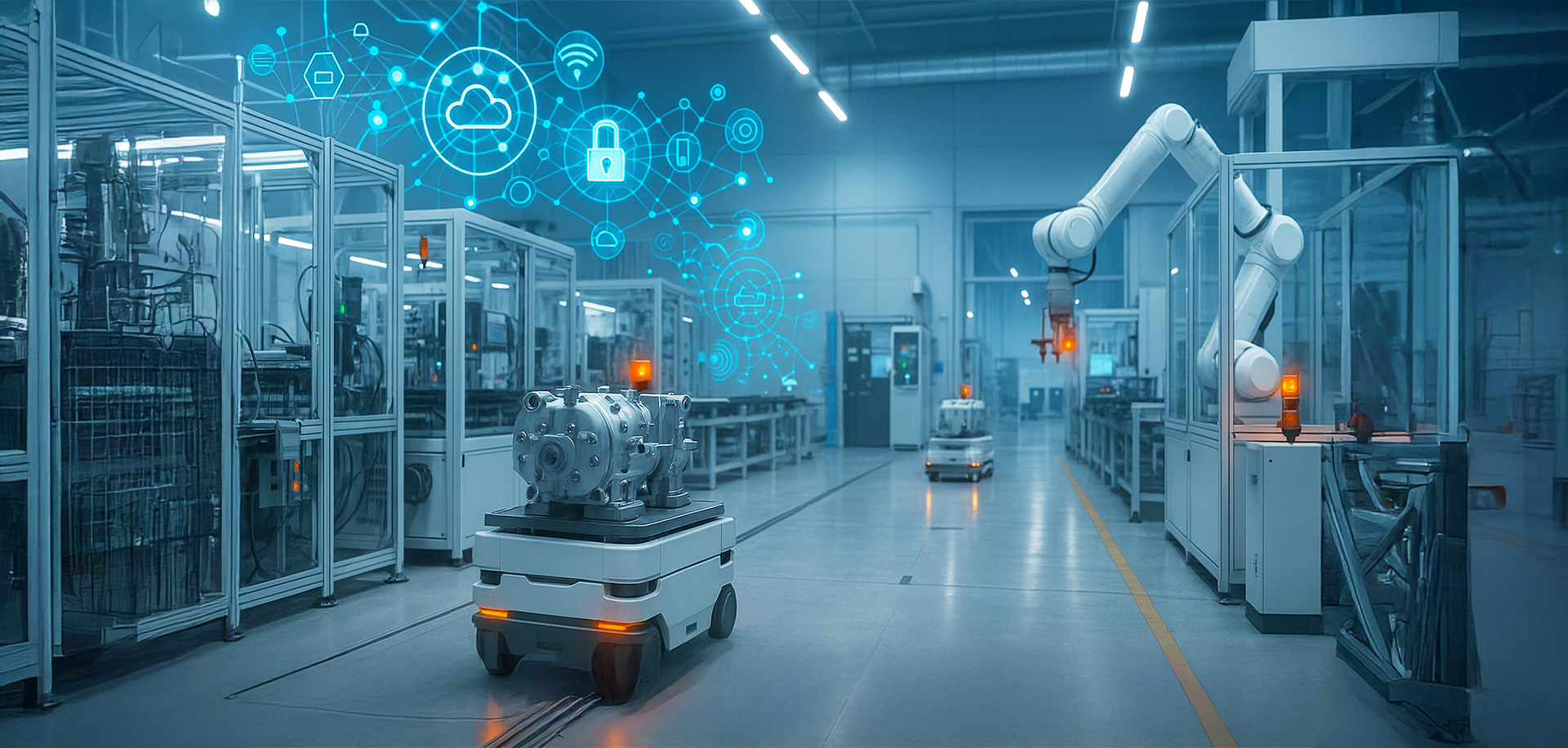
At the core of industrial IoT lie sensor networks. These sensors can measure machine operating conditions, parameters such as temperature, pressure, vibration and even energy consumption in real time. The collected data is transmitted to cloud based or local analytics platforms and processed instantly. In this way potential failures on the production line are detected early, maintenance costs are reduced and downtime is minimized. This approach paves the way for new strategies such as “predictive maintenance” and “condition based maintenance.”
Moving to a new topic:
Autonomous production ecosystems stand out as the next step of industrial IoT. In these ecosystems machines not only collect data but also make their own decisions based on it. For example robots on an assembly line can dynamically adjust their speed and movements in light of sensor data, increasing efficiency and quality. Such a level of automation reduces the need for human intervention while increasing the flexibility and scalability of production processes.
Real time data analytics forms the lifeblood of industrial IoT and autonomous production systems. Thanks to big data technologies, artificial intelligence and machine learning algorithms, information from thousands of sensors is analyzed simultaneously to produce a holistic picture of the system. This allows more accurate and faster decisions in critical areas such as production planning, inventory management, quality control and energy optimization. Especially in energy intensive sectors this approach not only reduces costs but also helps to decrease the carbon footprint.
Moving to a new topic:
Another important dimension of industrial IoT is providing end to end visibility of the supply chain. Smart sensors and RFID tags make it possible to track all processes from raw material input to final product shipment. This increases transparency and traceability throughout the supply chain; delays, losses and quality problems are detected more quickly. During global crises such as the pandemic this visibility significantly enhanced companies’ flexibility and adaptability.
Autonomous systems and robotic solutions are also redefining industrial safety standards. Delegating heavy and dangerous tasks to robots reduces workplace accidents while enabling employees to focus on more qualified and creative tasks. This transformation changes workforce profiles and increases the need for new skill sets. Therefore companies must prepare not only their technology but also their employees for this change.
Moving to a new topic:
Industrial IoT and autonomous production ecosystems also bring new challenges in terms of cybersecurity. Thousands of connected devices on the factory floor enlarge the potential attack surface. Therefore advanced security measures such as network segmentation, device authentication, encryption and continuous monitoring must be implemented. In addition by adopting a “security by design” approach at both operational and information technology levels integrated protection can be provided.
Standards and interoperability are also critical for the successful implementation of these technologies. The seamless integration of sensors and devices from different manufacturers, the sharing of data in common formats and the use of compatible protocols are required. International standards play a guiding role at this point and create a common language in global supply chains.
Moving to a new topic:
Industrial IoT and autonomous production systems also make significant contributions to sustainability goals. In areas such as energy efficiency, waste reduction, resource optimization and reduction of carbon emissions these technologies provide powerful tools. In this way companies not only gain a competitive advantage but also fulfill their environmental and social responsibilities.
In conclusion the industrial Internet of Things and autonomous production ecosystems create a paradigm changing transformation in the manufacturing world. This transformation requires not only rethinking technological infrastructure but also business models, organizational structures and human resources. When supported by the right strategy, security, standards and a human centered approach these systems will carry industry into the future by increasing both efficiency and flexibility. This path demands vision, innovation and continuous learning; but when implemented correctly it moves not only manufacturing but society as a whole toward a smarter, safer and more sustainable future.